Published 12.11.2026
“Designed to meet the requirements” is not the same as a certificate. Estonian data center earns a rare recognition worldwide
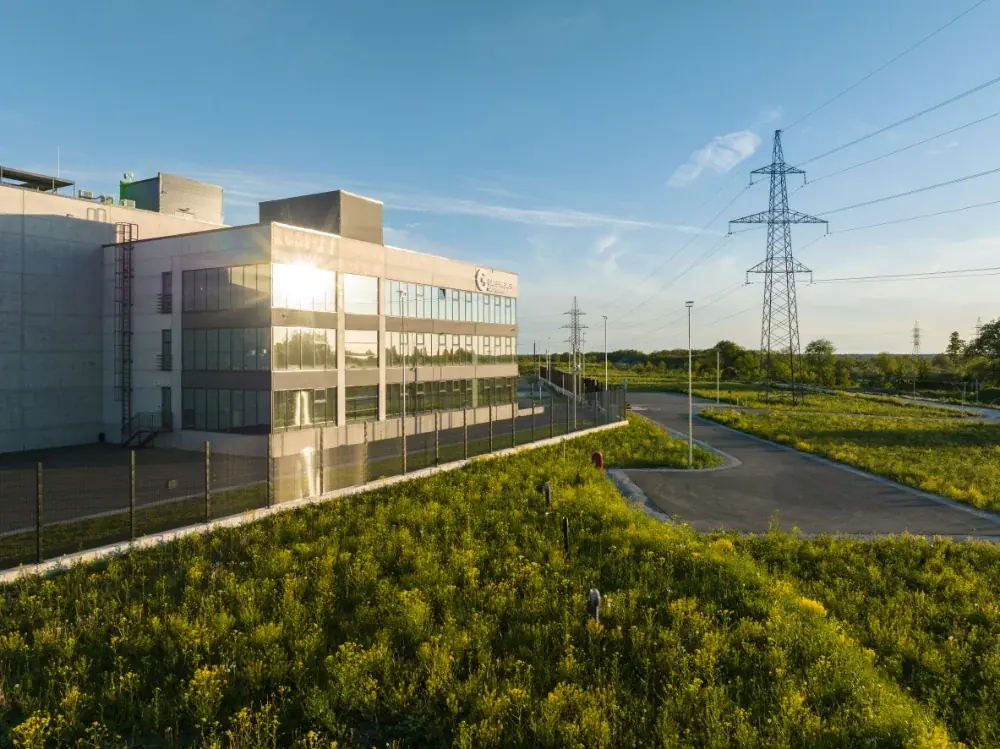
Estonia’s largest data center, Greenergy Data Centers (GDC), has successfully passed an audit and received a certificate under the new international data center standard ISO/IEC 22237. Considering that only about twenty data centers worldwide are known to have earned this new and extremely strict mark, the Estonians are among the first on the planet.
Our everyday digital life, from bank transfers and e-government services to company databases, depends on the servers in some big building never stopping for a moment. If even a single human error happens there, the consequences can be catastrophic. So that customers do not have to simply take the owner’s word for a data center’s reliability, strict standards have been created around the world.
What is the difference between ISO and the old standards?
To understand the real weight of the new ISO certificate, it is worth looking at how data centers have been assessed until now. According to Kert Evert, CEO of Greenergy Data Centers, the main reference used to be the “Tier” levels of the US Uptime Institute, which focused mainly on technology: power and cooling. The European Union, however, wanted a much broader and tougher standard for data centers that would also cover environmental requirements, security, site selection and process management. That is how the European standard EN 50600 was born.
By now the need for a single global standard has grown, so the new international ISO 22237 was created on the basis of EN 50600. This means that a data center that meets this ISO is accepted all over the world. “Today we have received both certificates, which means we comply with both the strict European Union requirements and the international ones,” Evert notes.
Small details help against human error
What does this “strict standard” that sounds so impressive on paper mean in real life? According to Evert, the reliability of a data center ultimately comes down to small details that steer people’s behaviour.
He gives an example from the loading areas: “Wherever goods move, the point load and load-bearing capacity of the floor must be marked. When a customer arrives with their goods, they know exactly whether they can leave their one-and-a-half-tonne equipment cabinet on a given floor or transport it along a certain route.” Martin Rungi, Head of Enterprise Segment at GDC, confirms this, saying that modern equipment cabinets are extremely heavy and that, if the load-bearing capacity of the floors were not precisely defined and marked from the start, it would make operations very difficult.
Another detail that looks simple but is critical concerns fire safety. The data center uses carbon dioxide extinguishers, while the office side has powder extinguishers. “Next to the extinguisher there has to be a sign that says specifically: use this on the data center side, or do not use it in the office,” Evert explains. He stresses that 60–80% of failures and data center downtime are in fact caused by the human factor. That is why every such sign is vital.
One of the best examples of this level of detail is the fire-stop penetrations. “All penetrations, about 400 in the building, are labelled with a QR code,” says Evert. “When you scan the code, it takes you to a database that states how to restore that particular penetration after you have opened it because of adding a new cable.” Without instructions, a worker may fill the hole with any material, which may not be fire-resistant, creating a dangerous weak spot in the building.
“Designed to meet the requirements” is not the same as a certificate
According to Martin Rungi, the new ISO is above all a mark of trust. Customers do not have to come and check GDC’s processes, security measures and risk mitigation themselves, because independent auditors have already done so with the utmost thoroughness.
Evert adds that, unfortunately, the data center market also sees a lot of marketing hype. “Many companies refer to standards on their websites, claiming that their data center is designed to meet the requirements,” says Evert. “The reality is that they do not have a certificate. That is misleading customers: if there is no certificate, then obviously some things have been left undone.” According to the CEO of GDC, holding a real certificate is exactly what distinguishes them from many other players on the market.
Pioneers in the age of AI too
What is interesting about GDC is also that they do not simply meet the given norms but sometimes help to create them. Evert points out that the alternative fire safety solutions devised in their data center have also been adopted into the requirements of the EN 50600 standard.
As the data center world is changing quickly because of the triumph of artificial intelligence and new liquid-cooled equipment, the people who write the standards also have their hands full. GDC is already taking an active part in discussing how this new type of technical infrastructure will be certified in the future.
“It seems we have done everything right, and there is a very good chance that in the spring we will go through a new certification round in which we also certify our AI factory solution,” Evert reveals. This is yet another sign that the Estonian data center does not simply do work that meets the standards but always stays a step ahead of the others.