
Published 25.6.2024
Estonia's own Netflix and a modern "piggy bank": how technology and managed change help you stay competitive
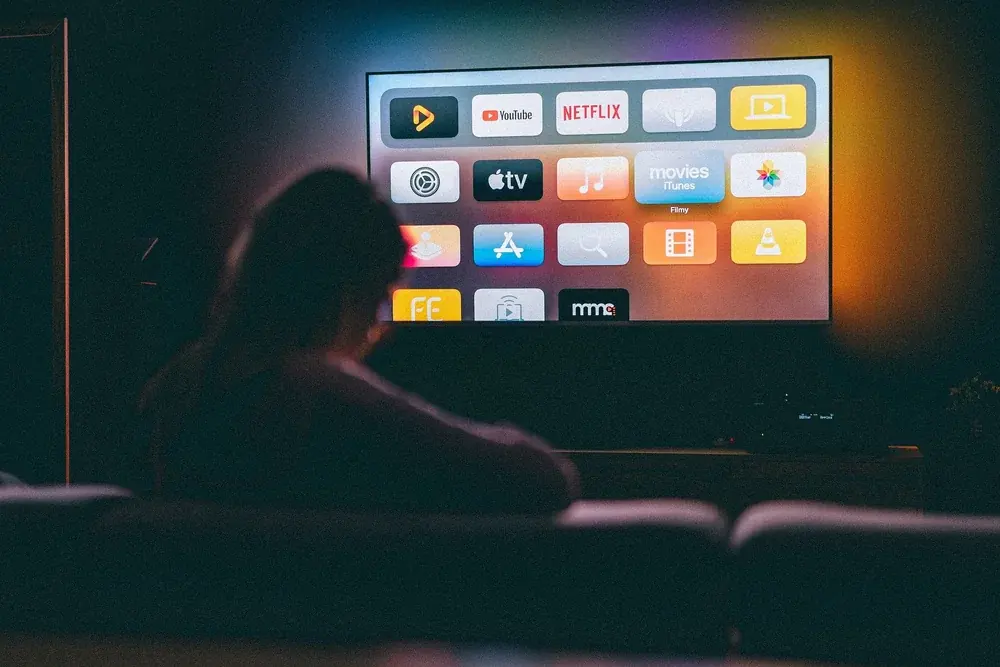
Technological innovation and managed change play an important role in an organisation's long-term competitiveness and, through it, in business. More than that, in the end they are unavoidable. Take a simple example: the suitcase was invented long ago, the wheel even earlier, but it took a long time before someone thought of putting wheels under a suitcase. The innovation was followed by commercial success and travel became significantly more convenient.
Today the "suitcase" and "wheel" questions are on the table at many companies. There is a choice: manage change or carry on the old way. Those seeking a competitive advantage generally find it through innovation. Estonia's largest commercial bank, Swedbank, and Estonian Public Broadcasting (ERR) share their success stories.
"If you start developing a mobile app when everyone already has a smartphone in their pocket, you are hopelessly late," says Tarmo Ulla, head of Swedbank's private customer financing division. "Today we already have to act on tomorrow's customer expectations."
More than 200,000 users of the modern piggy bank
There are many examples where technology has made it possible to change or add to a business model. To narrow the focus, let's take a classic banking service: saving.
Originally deposits were opened and built up at a bank branch, then it moved to internet banking and from there to the phone. At home people saved in a money box, but since cash use is on a downward trend and digital payments are clearly the future, saving at home fizzled out. Swedbank filled that gap with Rahakoguja ("Money Collector"): essentially a modern current account where money accumulates in tiny amounts, in cents, exactly as in a piggy bank in the old days. The customer can quickly activate Rahakoguja in the app or internet bank, and it starts collecting money from their card payments. Saving imperceptible small amounts adds up to a considerable result, though. "Thanks to Rahakoguja, customers who said they were unable to save have suddenly discovered they have accumulated a nice three-figure sum," says Ulla.
Although Rahakoguja is simple, convenient and almost imperceptible from the customer's point of view, bringing such technical solutions to market is not necessarily an easy task for a bank. "The banking system is large and complex and, above all, it has to be very secure. That means that behind even a seemingly tiny change, product or service there is a great deal of work," says Ulla.
To illustrate, Ulla draws a comparison from aviation. "If you need hot water, at home you can get it in several ways, and even buying a new kettle is quick and the prices are reasonable. But if you want to boil water at an altitude of 11 kilometres, a great many safety rules come into play. The water is the same chemical compound, H2O, but you cannot take any old kettle bought from the local shop onto an aircraft. Its use has to be suitable, tested, safe and so on for that environment. It is the same with the banking system: every change has to be thoroughly checked and adapted, it has to be secure. After all, in the end a bank sells trust: customers entrust their assets to us," Ulla explains.
Today Rahakoguja has more than 200,000 users. "To stay competitive you have to keep developing your products and services, and that is what we do. Our goal is to offer the customer more personal digital solutions that provide experiences tailored to them or improve customer service. If we can offer a better user experience and faster response to customers, that in turn strengthens our competitiveness in the market. Technological change helps us achieve greater market share and create a sustainable competitive advantage," says the head of Swedbank's private customer financing division.
Netflix's success leaves no room to bury your head in the sand
"Although public broadcasting is not a commercial company, we are probably in the same position as Swedbank," says Toomas Luhats, ERR board member and leader of the Jupiter streaming platform, giving an example: "Where people used to watch so-called linear television, at some point the feeling arose that I will watch a series when I want to, not when the TV channel shows it. The importance of content has not gone anywhere; what has diminished is the role of the channel."
On the tailwind of catch-up and streaming's popularity, ERR could not bury its head in the sand either. "The arrival of Netflix set a clear direction for where the world is heading. In my view it is the task of public service organisations to keep up with the times in the same way. When ERR was founded, radio crews rode to location on horseback. Today they still go by car, or even by electric car," Luhats compares.
Just as leaders of private companies try to anticipate what the future brings, public broadcasting too, according to Luhats, has to foresee what people's preferences might be in the future. "Thanks to that we remain trustworthy, relevant and necessary. Public broadcasters have to be objective beacons distributing their content. If nobody sees or hears it, public broadcasting is of no use," he says. That the future lies in streaming can be seen almost everywhere. "We have seen these developments everywhere in the world, everywhere in Europe," Luhats confirms.
The courage to start is half the battle
"Before Jupiter, ERR had many different pages on the web for watching content, dating from different eras, rather fragmented and certainly not fully matching viewers' interests," Luhats recalls. So on returning to ERR in 2019 he was given the task of building "ERR's own Netflix", a new catch-up environment we know today as Jupiter. "Credit here goes to ERR's IT development department, which by then had organised file integration so that different departments would not use different file types for the same kind of content," Luhats notes.
The goal was set to put up one very, very good streaming platform. "None of us knew at the start where we would end up. Sometimes good things happen precisely thanks to that courage to start," Luhats confirms that fortune favours the brave. "We have had very good partners, be it the design company Fraktal or Devtailor (a software development company), which two weeks after Jupiter's launch programmed Apple TV readiness for us free of charge. If you do something cool and do it with heart, the future is bright too," Luhats believes.
Where previously the purchased content, thousands of films, series and documentaries, figuratively sat on a shelf waiting for its time to be broadcast, with the arrival of Jupiter the same content is available to everyone at any time. "It is as if we opened the doors of our warehouses to people, and every day they get to share in all the wonderful content produced in the world. Our acquisitions team, led by Katrin Rajasaar, had to take on some quite complicated contract negotiations, because besides the linear channels the FVOD (free video on demand) rights had to be acquired for the same money. In the end we managed to negotiate so that we pay nothing extra for streaming," Luhats reveals.
According to Luhats, Jupiter is today Estonia's most-watched streaming platform. "Since April 2020, when we came to market, organic growth has continued. People who watch us are still being added. We have also grown strongly in the young target group. Today we are present with our app in more than 90 percent of new smart TVs, which is a convenient way for people to watch," Luhats highlights the importance of technological solutions.
Naturally that does not mean one can rest on one's laurels. "Both technologically and in terms of content we have to try to be ever better. We are limited by financial resources, which means we have to be about twice as smart as everyone else to make something very, very good," Luhats believes.
Why is change often slow?
Companies' courage to innovate is also seen daily in the office of the Baltics' largest data center, which is in contact with dozens of organisations. According to Tõnu Grünberg, CEO of Greenergy Data Centers, technology-based change is often slow. "Because the sums invested are large and the choices often fundamental, they are weighed thoroughly. Deciding certainly requires courage and vision," Grünberg shares.
"A good example here is Playtech, which recently announced its cooperation with us and took a fundamental direction towards greater energy efficiency and a smaller ecological footprint. They invested at once both in more reliable and efficient equipment and in a greener server room. Undoubtedly that has a positive effect on their business and competitiveness, because in the IT world carbon emissions are measured ever more keenly. So besides the product itself, its footprint can also give a competitive advantage," he adds.
As a rule, new systems, automation and digitalisation can also improve the speed, accuracy and reliability of what is offered to consumers. That can give an organisation an edge over competitors and increase its ability to offer customers innovative solutions. Customer satisfaction must not be forgotten either: technological change makes it possible to respond better to customers' expectations and needs.
"In summary, all that remains is to recommend that entrepreneurs take the initiative and see opportunity in change. That is where the development and economic growth everyone is waiting for lie," Grünberg concludes.