
As the heating season begins, many Estonians worry about how to keep their homes warm and what it will all cost. In Hüüru on the edge of Tallinn, however, stands a high-tech building with heat to spare. Kert Evert, development manager at Greenergy Data Centers, explains what waste heat is and how data centers can become part of our heating solution in the future.
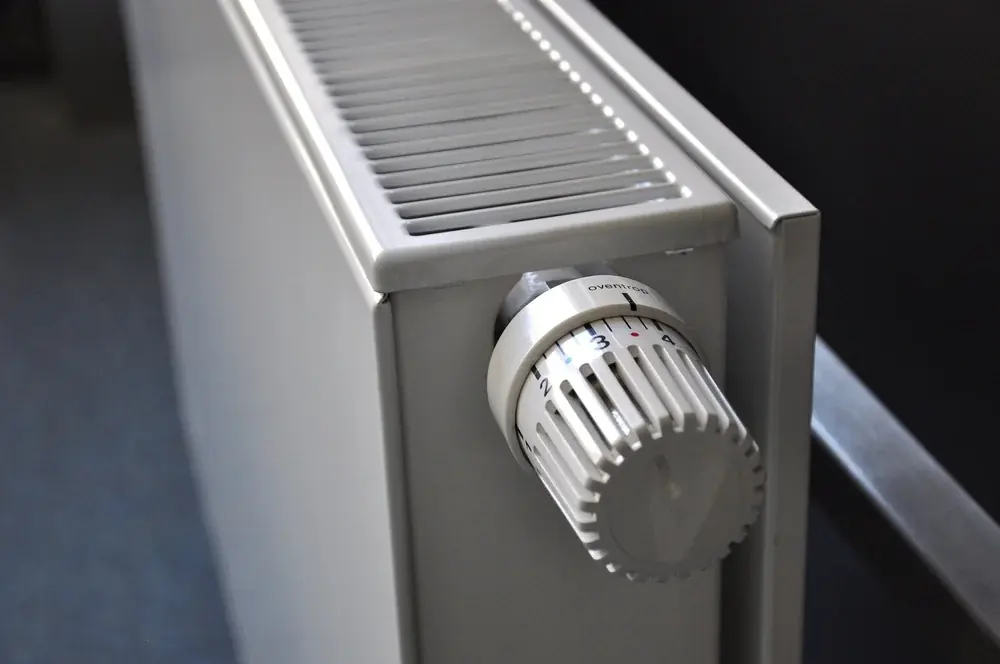
The ideal users of waste heat are properties near the data center, whether residential or industrial buildings. Photo: Pixabay
What is waste heat and how is it produced?
Everything that is on the internet also has to physically be somewhere. As a rule that means servers and other IT equipment located in data centers (clouds, too, ultimately sit in data centers). That equipment in turn consumes a great deal of energy, which turns into heat in the process. Half in jest, data centers can be compared to radiators that turn electricity into heat while doing useful work. To give IT equipment the best operating temperature, a data center has to do something with that heat.
There are different ways to build a cooling system. Many data centers built years ago take in fresh air from outside and blow the hot air back out; all the heat goes straight outdoors through the vents. We, for example, have chosen a different path. Our heat carrier is water circulating in a closed pipework. That means all the heat the equipment gives off is transferred to water, the warm water flows into heat exchangers and from there, cooled, goes round again. Figuratively speaking, the heat exchangers take that heat out of the water, and right now that can be done in three ways.
The first option is to extract the heat through the heat exchangers and use it for our own building. The second is to transfer it to glycol and take it to the heat exchangers on the data center's roof, where cool outside air cools it. The third is to chill the water inside the building with chillers, which work on a similar principle to modern refrigerators. In terms of energy use that is the least efficient option.
How can that heat be used outside your data center?
For that, the data center needs the technical readiness and, on the other side, a partner who wants to and knows how to use waste heat. We have the technical capability to export heat from the building. Negotiations with potential recipients are under way.
The ideal users of waste heat are properties near the data center, whether residential or industrial buildings. To get the greatest benefit, the heating systems of those buildings should be designed to work at low temperatures. In a residential building that means underfloor heating, for which an inlet water temperature of 30 to 40 degrees is already suitable. We could already supply that today with the help of our heat pumps.
When you start sharing waste heat at some point, would you supply it to a heating plant or directly to a residential area?
Most likely to a plant. Just as today we send warm water to our roof through heat exchangers and various pipes, it will most likely leave the site the same way. Outside the site there is the next pipe, which carries the heat on to the developer's substation. If needed, the water temperature can then be raised in the substation.
Is it possible to calculate how many households with low-temperature systems could be heated with the GDC data center's waste heat?
With the first full building we could ideally export 6 MW of heat. That would heat a hundred apartment blocks or about 5,000 households.
The longer the route, the greater the heat loss. So those 5,000 households would need to be fairly close to us. That is why heating apartment blocks, large offices or industrial buildings is a good alternative. I know that in Finland such a solution is used in shopping centers, for example. A shopping center would be quite a good solution here too.
Could an industrial building be put up near the data center, then?
If it is so-called safe production, without risks that threaten the data center, then why not. When planning the Greenergy Data Centers facility, for instance, the idea of building large greenhouses was briefly in the air. The by-product of one line of business would have been the input of another. On one side of the fence our digital society and businesses would grow, on the other, vegetables. It may sound odd, but there are several similar examples around the world. In the end it comes down to the most sensible use of resources.
Today, though, I am not planning greenhouses; we are thinking more about opportunities for green energy generation.
Is anyone anywhere actually already using data center waste heat to heat homes or industry? Can you give a concrete example?
According to the think tank Energy Innovation, very large data centers with a capacity of 100 MW can provide heating for about 80,000 homes. Microsoft's data centers in Helsinki, for example, have teamed up with the district heating provider Fortum, and as a result the waste heat of the servers reaches thousands of households in the Finnish capital.
In Denmark, Fjernvarme Fyn, which runs the district heating of the country's third-largest city Odense, helped design and build a system for Facebook's data center that provides up to 100,000 MWh of energy a year as waste heat, enough to heat up to 6,900 homes.
So it is a working, proven model.
When could GDC start sharing waste heat?
The larger the data center and its workload, the more waste heat is produced and the more sensible it is to use it. Our complex is still in its growth phase, and the building itself and some technical equipment need heating, so the heat surplus is only just emerging.
It is important to mention here that sharing waste heat is not a profitable business for us but rather a green mindset. Because building and operating such a system requires considerable resources, success comes from several parties contributing together. Besides the heating company, the state could also be interested in the project, as it can thereby contribute to meeting climate goals.
In conclusion, a data center is in principle one big machine for turning electricity into heat, and it is indispensable for running today's digital society. Clouds are no exception, since they too ultimately sit in data centers. So it makes sense to reuse the heat produced. If we talk about 5,000 detached houses, for instance, you can calculate how much of some other kind of fuel goes unburned and electricity unspent as a result. The data center's waste heat replaces it, and there are good examples to draw on in neighbouring countries. All that remains is to follow the good example, and that is exactly what Greenergy Data Centers plans to do.