
Keeping our digital society running is extremely energy-intensive. Everything we do online has to be stored and processed somewhere, and the volumes are enormous. An estimated three percent of annual global energy consumption goes to data centers, where the internet we see on our digital devices physically lives. It is forecast that by 2030 the share may have risen above ten. How do data centers affect us in the context of the energy crisis?
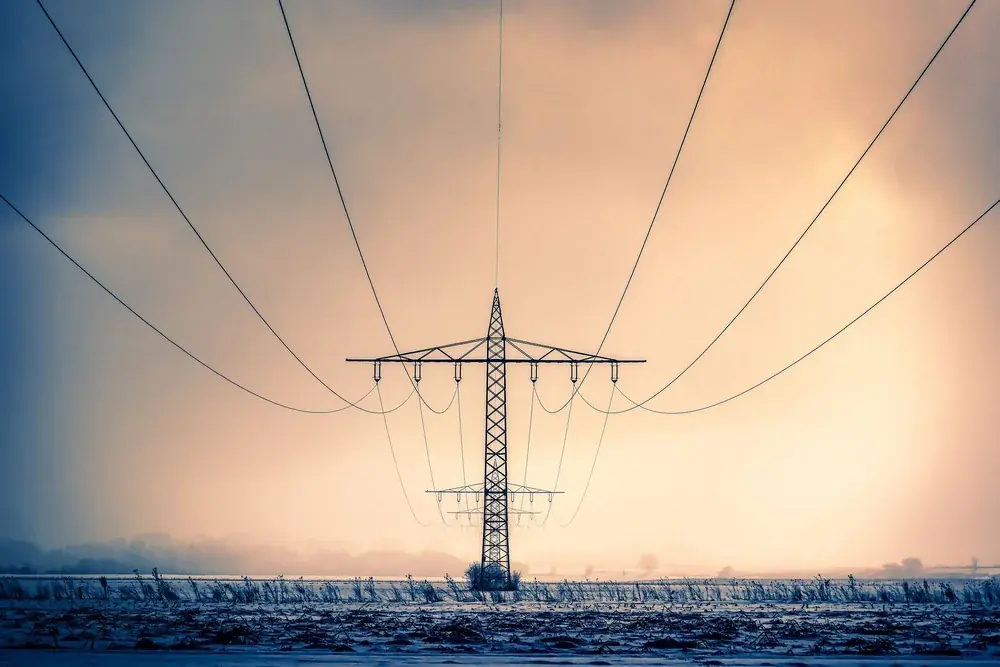
A modern digital society demands large amounts of energy. Photo: Pixabay.
Electricity and its availability increasingly shape the business and living environment
The energy needs of larger data centers can easily equal those of an average town. They use as much electricity as tens of thousands of households combined. Estonia currently has one large-scale data center; abroad there are far more. In places so many that building new ones has been banned, because there simply is not enough electricity. The Netherlands and Ireland, for example, have applied bans, so far short-term ones.
Like many people and businesses, data center operators want to be located near the arteries of life. The concentration of large complexes creates a new type of electricity deficit, which in turn affects the development of regions, the Financial Times reports. Once the limit of the transmission networks is reached, nothing more can be built, not even housing. So our digital footprint directly affects how the physical living environment takes shape.
The problem affects West London, for example, and the area known as the "M4 corridor", which has become a high-tech hub. The "corridor" holds the data centers of Microsoft, Amazon, Dell, Huawei, HP, Sony and many other technology giants, so the load on the power grids is heavy. That is why the construction of new data centers has come under sharp scrutiny in many areas.
Ireland, for example, which already has more than 70 data centers, is considered Europe's fastest-growing data center market, Gizmodo reported. Last year it was written that data centers in Ireland already use about 900 megawatts of electricity, at least 11% of the country's entire supply. When data centers alone (more precisely, keeping a modern digital society and its businesses running) consume several towns' worth of energy, it inevitably starts to affect security of supply.
Given the global triumph of e-life, there is no reason to think anything will get easier in future. Last year's forecast by Ireland's national grid operator EirGrid showed that, if everything continues as it is, local data centers will account for almost 30% of the country's annual electricity consumption by the end of the decade.
Climate change plays its part too. During this summer's heatwave the cloud servers in Google's and Oracle's London data centers had to be switched off, Gizmodo reported. That means that as the climate warms, more energy has to be set aside for cooling as well. It also shows that moving to the cloud is not the solution, because those services ultimately rest on data centers too.
In summary, it should be remembered that data center energy consumption is a problem in specific cities that have become the world's communications hubs.
Instead of bans, the solution lies in energy efficiency
As mentioned, some countries have temporarily banned the construction of new data centers to secure their energy supply. Singapore is one: data centers currently account for about 7% of Singapore's electricity consumption, according to AKCP.com. But as cloud companies, telecoms operators and international organisations expand into South-East Asia and the rest of the continent, the demand for data centers cannot be denied. So what did Singapore do?
At the start of the year the government announced that it was lifting the ban on new data centers, though not unconditionally. New centers must pass strict scrutiny and meet high energy-efficiency standards. The aim is to make data centers truly green and sustainable.
Since data centers are indispensable and consume a great deal of energy, we quickly arrive at energy efficiency. One way to measure it and compare different complexes is PUE (Power Usage Effectiveness). The lower the PUE, the better. In Europe, for example, new data centers that have joined the Climate Neutral Data Centre Pact have a 2025 target of PUE 1.3 in cool climates and 1.4 in warm ones.
What does that mean? If the PUE is below 1.3, then for every kilowatt-hour that goes directly to running IT equipment, less than 30% is added for cooling, connectivity, security and reliability. The corresponding global figure in 2021 was 57% on average (a PUE of 1.57).
Could Estonia also run out of electricity?
Although the sustainability of data centers has received ever more thought in recent years, and progress has been made, designing, developing and operating truly green data centers remains a major challenge, both worldwide and in Estonia. The transition to carbon-free data management requires changes in how infrastructure is planned and built. Many older data centers cannot economically be brought up to modern standards, because that would mean replacing a large part of the systems or starting again from scratch. That applies especially to server rooms in organisations' offices, which were never meant to meet special conditions. That inevitably means higher energy costs too. Higher demand for electricity in turn affects the price, which is set on the open market by supply and demand.
Whether energy efficiency comes to the fore in data centers depends largely on the market. If customers demand the smallest possible ecological footprint, it will be offered. If it stays in the background, the shift towards greener digital infrastructure happens more slowly. European climate policy, tightening in the coming years and placing stricter requirements on data management, will play its part here.
The Baltics' largest data center, Greenergy Data Centers (GDC), targets a PUE of 1.2 or less. That means electricity costs a quarter lower than in an average data center. GDC aims to use electricity as efficiently as possible, and work is also under way to build green generation capacity next to the data center. All in all, that is smart both for nature and for smaller electricity bills.
Returning to the security of electricity supply mentioned at the start, data centers do not play a major role in Estonia, or in the Baltics more broadly, and still make up a very small share of total electricity consumption. Even so, the GDC complex has been built in what is probably the best-supplied location in Estonia for electricity. One has to be ready for every future scenario.
In the longer term, the availability and efficient use of electricity are of key importance to data centers and their customers. In the big picture it shapes the development of our digital society, because data centers are the foundation of everything that lives or works over the internet.