
Whatever legal business you run, you generate and use data. If you cannot access your data, the business stops or is significantly damaged. Information does not move, orders do not move, money does not move. So the more your activity relies on IT systems and data, the more critical their safekeeping becomes.
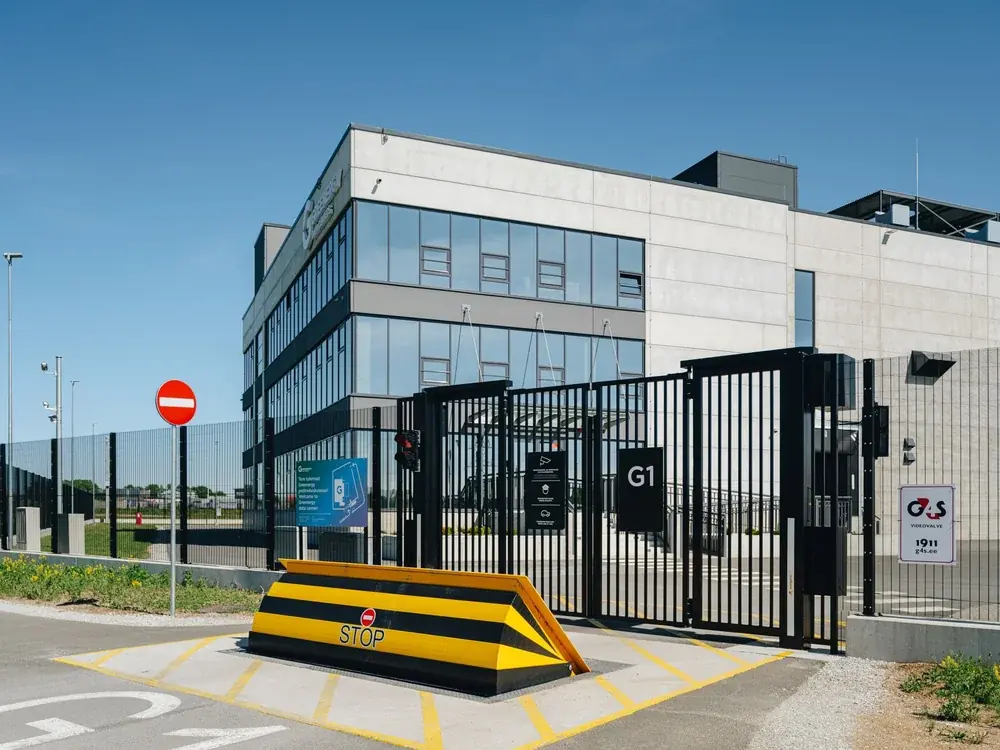
Data needs physical protection too. Photo: Tõnu Tunnel
Broadly, every organisation has two choices:
- Its own IT equipment in an office or a data center
- Someone else's IT equipment in some data center (with a cloud provider, for example)
Neither of these solutions is bad in itself. What decides is the reliability and security of the choice.
Depending on the need for security and reliability, the head of the organisation or the administrator of its IT systems should be able to answer "yes" to as many of the following check questions as possible. The more positive answers, the more securely you are protected and the more surely your activity continues even in the event of accidents or a malicious attack.
How many questions about the conditions in which your data is kept can you answer "yes" to with peace of mind?
- I know where our data physically is (where and in which building) and who can access it. The chance of someone copying something off my equipment or damaging it is vanishingly small.
- The company's data is physically in at least two different places. If a fire destroys the equipment in one place, I can carry on working from the other.
- The cabinet or cabinets holding my data have at least two independent electricity connections. If a fault occurs at one substation, my business is not left without power.
- My server room has duplicated cooling capacity. If the main system fails, my equipment does not overheat.
- My server room has duplicated and physically separate connectivity. If a careless digger operator cuts through the cable route to the building, the connection to the outside world holds.
- My server room was originally designed and built for that purpose.
- The server rooms have 24/7 manned security and an operations center. I know someone deals with both physical and cyber security every day.
- Besides people, computer systems keep an eye on security, because a human cannot monitor hundreds of cameras and sensors in parallel.
- Only authorised and physically identified persons can access the servers; biometrics provides an additional layer of security.
- My server room cannot be entered by deception, for example someone tailgating an authorised person; security gates help here.
- The infrastructure supporting the server rooms is isolated from the public internet, so the equipment cannot be switched off remotely.
- The server room meets international standards (such as ISO 27001, EN 50600), which confirms reliability and affects credibility in the eyes of partners and customers.
- The server rooms use an oxygen-reduction system that rules out fire. At least one further fire-prevention system is in use in addition.
- The operation of the server room is monitored and checked 24/7. No deviation goes unnoticed and I learn of problems immediately.
- The infrastructure supporting the server room is regularly tested and maintained. I can be sure the backup systems really work.
14 to 15 "yes" answers
You use a very secure private server room or a world-class data center. The digital reliability and security of your operations are excellently ensured, and on the technical side you can probably cope with anything a world full of surprises has to offer. Your partners and customers have an additional reason to trust you.
12 to 13 "yes" answers
Regarding the security and reliability of your operations, you should consider how seriously the existing shortcomings threaten the sustainability of the business. You are taking risks and should have a plan to eliminate the weak points. Part of the plan may be finding an alternative place to keep the data or making improvements to the existing one. The goal is to increase future resilience.
10 to 11 "yes" answers
If the reliability of IT systems and the availability of data are important to the organisation's successful operation, the existing shortcomings should be given serious attention. It would be sensible to map and prioritise them and start with the most critical. Depending on the size of the shortcomings and the cost of remedying them, finding an alternative place to keep the data may also be considered.
9 or fewer "yes" answers
Your business is clearly vulnerable in terms of the reliability and security of its data management. Several weak points increase risks that may no longer be reasonable to take. The solution is a thorough mapping of needs and weighing the alternatives, whether building a private server room or moving to a data center or the cloud. Action should be taken at the first opportunity.
They say data is today's gold. The conditions in which your most valuable asset is kept deserve regular attention. When mapping alternatives, it is worth including the Greenergy Data Centers facility, the most secure and reliable data center in the Baltics, in your shortlist.