
Today, 22 March, is International Data Center Day. Although data is the foundation of the digital society, we often do not notice how much we depend on it every day. From a card payment at a self-service checkout to booking a doctor's appointment in the patient portal: without the data centers that all our online activities rest on, life would be nowhere near as convenient. So today is a good moment for a small reminder of how far data centers have come in a few decades, and how science-fiction-like the future sometimes looks.
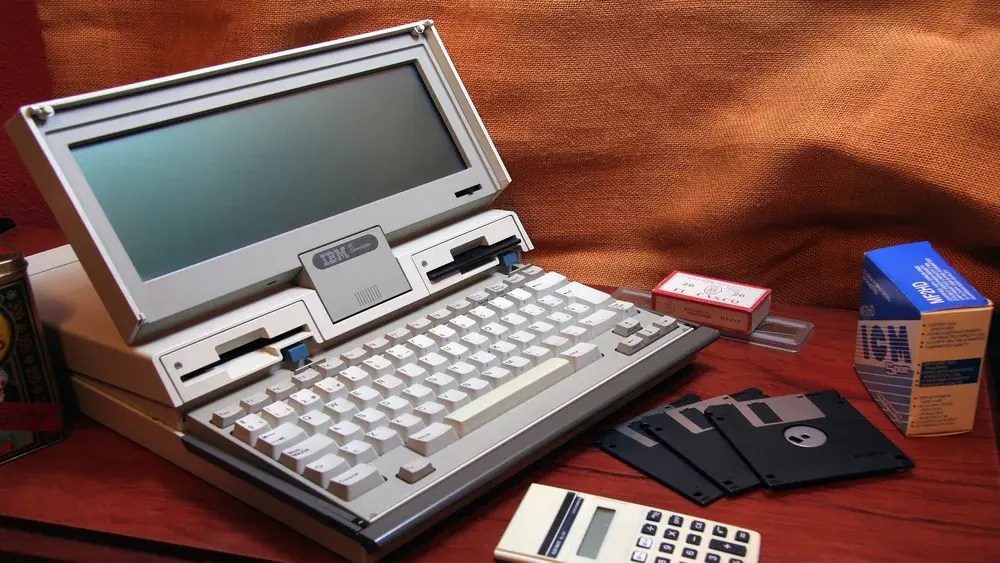
Like computers, data center technology has developed enormously over a couple of decades. Photo: Pixabay
The purpose of International Data Center Day is to explain the role of data centers in modern society. First, though, we should spell out what these data centers actually are. As the name says, they hold large quantities of data and ensure it is available and can be processed (you can see how a data center works here). Without them most apps and websites would not work. Today data centers matter to almost every company and organisation, because they make the efficient and reliable management and use of data possible. But it was not always so.
In the old days data centers were nothing more than rooms housing powerful computers used for scientific research or managing large data sets. In fact, those "old days" were not much more than half a century ago. The first data centers were created in the 1950s and were used mainly by research institutions and the military. At first, large machines such as the IBM System/360, weighing hundreds of kilograms, were put to use. The heaviest models of the IBM System/360, developed in the 1960s, weighed 6 to 13 tonnes depending on memory capacity and the number of processors (a passenger car weighs under two tonnes on average, an African elephant six).
The world's first web server was invented by Tim Berners-Lee in 1989 and set up on a NeXT computer in 1990. It had a 2 GB disk and a 256 MHz processor. Over the years technology has advanced rapidly and become more efficient. Devices have also become much smaller and more energy-efficient. That is easy to illustrate: an average smartphone, for example the iPhone 6 launched nine years ago, has a 1.3 GHz (1,300 MHz) processor, 32 GB of storage and 1 GB of main memory. Those figures are many times more impressive than the first server's.
Against the backdrop of the technological revolution, people increasingly realised that managing large data sets could be useful in everyday work too. The problem was that the old computer rooms were no longer adequate for new equipment to handle the data and computing capacity. So companies began to create dedicated data centers for managing and processing data.
The triumphant march of data centers from research and military institutions into everyday life
The applications of data centers have changed too. In the early days they were used mainly for scientific and military purposes, but today they are needed in practically every area of life. Data centers matter in banking, electronic communications, healthcare, retail, government and many other sectors. They allow companies to store, exchange and process large quantities of data, which in turn lets them make better business decisions and offer lightning-fast customer service.
Estonia's first, and so far only, large-scale data center whose detailed plan and design were drawn up specifically around the needs of a data center was completed only at the beginning of last year. Greenergy Data Centers, in Hüüru on the edge of Tallinn, stands out not only for its size but for being future-proof. The center's cooling systems are controlled by artificial intelligence, the complex holds the highest international certificates, and it is protected with cutting-edge technology and armed security. Read a fresh interview with Tõnu Grünberg, head of the Baltics' largest data center, on our blog.
Will the data centers of the future be built in the ocean depths and on the Moon?
Although Greenergy Data Centers already points the way to greener and more dependable data hosting in the Baltics, development is far from over. The more data is created, the more powerful data centers have to become. Managing large data sets demands ever more resources. But the whole land cannot be covered with data centers, so companies have started looking for new ways to take the capacity and efficiency of their centers to the next level. That has led engineers to liquid cooling, for instance, which in short means "immersing" servers. Because special liquids conduct heat many times better than air, it allows the power of a server cabinet to grow to as much as 100 kilowatts (several dozen times more than the current average).
Staying with water, the possibility of building data centers in the ocean depths has been studied. The technology giant Microsoft has been developing that direction for a decade now. Under Project Natick, the first prototype underwater data center, named Leona Philpot and 2.5 metres in diameter, was placed in the Pacific Ocean at a depth of nine metres in 2015. In addition to ordinary server computers, the capsule was fitted with 100 different sensors to study how the systems perform and what effect it has on the environment.
According to Microsoft, an underwater data center has several advantages. About half the world's population lives within 200 kilometres of a coast. Underwater servers would offer a way to bring data and data processing closer to people, providing faster data exchange.
Another forward-looking project is a data center on the Moon. In early March SpaceNews reported that the US start-up Lonestar Data Holdings had raised 5 million dollars to continue developing lunar data centers. The first prototype of a lunar data center is to be sent into space before the end of this year. According to the company's CEO, Christopher Stott, the necessary hardware is ready and waiting for the launch.
True, lunar data centers sound rather absurd, but the idea may actually have merit for several reasons. First, a data center on the Moon would be able to store and manage the large amounts of data collected from the Moon and from space without the time delay of sending them to Earth (the Earth-Moon communication delay is about 1.25 seconds). In the future that would benefit scientists working on the Moon itself.
Second, the Moon has far fewer earthquakes and weather events than Earth, which would probably make a lunar data center more stable and reliable. Lonestar's CEO has even boasted that the Moon is a "fantastic platform" for data centers, citing the absence of climate change as one reason. From a sustainability angle, too, lunar data centers would have an advantage over terrestrial ones, since there is more solar radiation on the Moon than on Earth. A truly green solution!
In the more distant future, building a data center on the Moon could be a step in humanity's expansion into space, laying the groundwork for future lunar missions and research.
In conclusion, we can be sure of two things. First, the volume of data in the world will grow, and with it our dependence on data centers. That in turn drives innovation and development. Whether the data centers supporting our daily lives end up in cities, in the oceans or even on the Moon, time will tell.